
Last updated: August 2026
By Jeff Raybould, REALTOR®
Utah License #14275595-SA00
Thinking about moving to St. George, Utah? The area offers dramatic red-rock scenery, comparatively affordable living for many people relocating from Southern California, extensive outdoor recreation, and a growing selection of new and established communities.
However, buyers should also prepare for very hot summers, rapid growth, water-conscious landscaping, homeowners associations in many developments, and significant differences between St. George and neighboring communities.
I have invested in and built homes in Southern Utah since 2005. In 2026, I relocated here full-time from Southern California. Even after spending years in the area, living here brought a different perspective. What stood out most was how clean the area is, how much less many everyday expenses can be compared with Southern California, the incredible views, and how happy people generally seem to be.
Here is what prospective homebuyers should understand before moving to St. George.
Is St. George, Utah a good place to live?
For buyers who enjoy sunshine, outdoor recreation, newer communities, striking scenery, and a smaller metropolitan environment, St. George can offer an excellent quality of life.
The area is especially appealing to people who value access to golf, hiking, boating, national and state parks, and year-round outdoor activities. Buyers should still visit during the summer, explore several communities, and compare housing and utility costs before deciding whether it is the right fit.
St. George is growing quickly. According to the U.S. Census Bureau, the city’s estimated population reached 108,713 in 2025, representing approximately 14% growth from the 2020 population estimate base. That growth has created more housing, shopping, restaurants, medical services, and employment opportunities, but it has also increased traffic and development.
Is St. George cheaper than Southern California?
For many people moving from Southern California, St. George can feel considerably less expensive. Housing, property taxes, fuel, insurance, utilities, and everyday expenses may all differ from what a buyer previously paid in California.
That does not mean every home in St. George is inexpensive. Prices vary substantially based on the neighborhood, lot, views, age, size, community amenities, and whether the property is part of a golf, luxury, or master-planned development.
The U.S. Census Bureau reported a median value of $496,100 for owner-occupied housing units in St. George during the 2020–2024 measurement period. Current asking and selling prices can differ considerably from that historical estimate, so buyers should use recent comparable sales when evaluating a specific property.
The more useful question is not simply, “Is St. George cheap?” It is, “What type of home and lifestyle can I obtain here compared with where I live now?”
What is the scenery like?
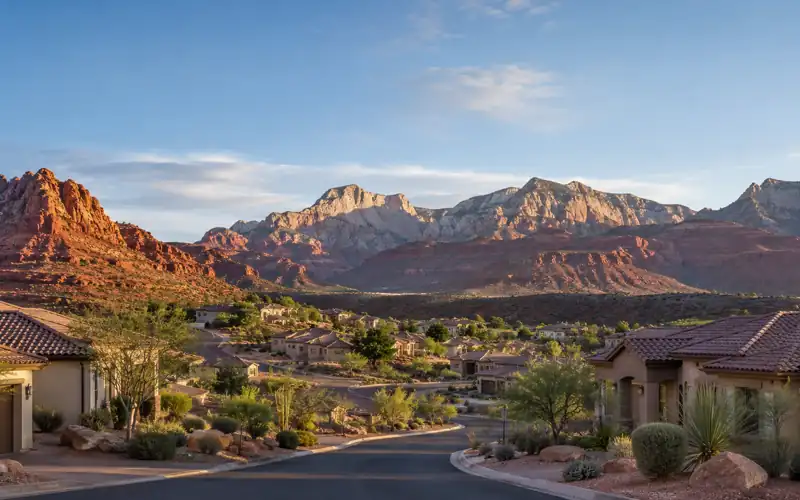
The views are one of the biggest differences between Southern Utah and many other real-estate markets. Depending on the location, homes may overlook red cliffs, Pine Valley Mountain, desert mesas, golf courses, or protected open space.
A great view can also affect a property’s price, orientation, afternoon heat, privacy, and future resale appeal. Buyers should determine whether an advertised view could potentially be affected by future development. Vacant land is not necessarily permanent open space.
When evaluating a view property, I recommend visiting at different times of day and reviewing nearby zoning, planned roads, and future development whenever possible.
Which communities should buyers consider?
“St. George” is often used to describe the broader Southern Utah area, but the surrounding cities and communities offer different housing styles, amenities, and development patterns.
St. George
St. George offers the area’s broadest selection of established neighborhoods, newer developments, shopping, restaurants, medical services, recreation, and golf communities. Housing ranges from condominiums and townhomes to luxury properties and larger custom homes.
Washington City
Washington City is immediately northeast of St. George and has experienced substantial residential development. Buyers will find established neighborhoods, master-planned communities, new construction, and convenient access to Interstate 15.
Ivins
Ivins is known for its red-rock setting, quieter atmosphere, distinctive scenery, and proximity to Snow Canyon State Park. Its housing inventory includes established homes, newer communities, luxury properties, and architecturally distinctive residences.
Hurricane
Hurricane provides access to Sand Hollow, outdoor recreation, and growing residential areas. It can appeal to buyers who want more distance from central St. George while remaining within the broader Washington County market.
The right choice depends on the buyer’s budget, preferred home style, commute, recreation priorities, tolerance for ongoing construction, and desired proximity to services.
How hot does St. George get?
St. George has a hot desert climate. Summer temperatures commonly reach the upper 90s and can exceed 100 degrees. Buyers relocating from a milder climate should consider the effect of summer heat on electricity usage, outdoor activities, landscaping, vehicles, pets, and home orientation.
Covered patios, window exposure, insulation, HVAC condition, shade, and energy-efficient construction can make a meaningful difference. A west-facing backyard may feel very different in July than it does during a winter showing.
The tradeoff is relatively mild winters, abundant sunshine, and long seasons for golf, hiking, and other outdoor activities.
What should buyers know about water and landscaping?
Water conservation is an important part of living in Southern Utah. Desert landscaping, artificial turf, efficient irrigation, and water-conscious plant selections are common throughout newer developments.
St. George restricts outdoor irrigation with culinary water to evening and morning hours during the summer conservation period. Landscaping standards and watering rules can vary by municipality and homeowners association.
Before buying, review:
- Existing irrigation and landscaping
- Monthly water usage
- HOA landscaping requirements
- Secondary irrigation availability
- Pool and water-feature maintenance
- Any restrictions affecting future landscaping changes
A large lawn may require more water and maintenance than a buyer expects in a desert environment.
How do utilities work in St. George?
Utility providers vary by location. The City of St. George provides combinations of electric, water, sewer, and garbage services in many areas. Certain neighborhoods south of the Virgin River receive electricity from Dixie Power while obtaining other services through the city.
Buyers should request recent utility bills when possible and confirm the providers serving the specific property. Electricity costs can be especially important when evaluating a larger home, swimming pool, older HVAC system, or property with substantial western exposure.
How do Utah property taxes work for a primary residence?
Utah allows qualifying primary residences to receive an exemption equal to 45% of fair market value for property-tax purposes. This generally means an eligible primary residence is taxed on 55% of its assessed market value.
Second homes, vacation properties, vacant land, and certain transient-use properties may not qualify and can be taxed on 100% of assessed value.
Buyers should confirm a property’s status with the Washington County Assessor instead of assuming that the seller’s current tax bill will remain unchanged after the purchase.
Are homeowners associations common?
Many newer, gated, golf, condominium, townhome, and master-planned communities have homeowners associations. HOA fees and responsibilities differ significantly.
Before purchasing, buyers should review:
- Current monthly or quarterly dues
- Pending assessments
- Reserve funding
- Architectural restrictions
- Landscaping responsibilities
- Parking regulations
- Rental restrictions
- Pet rules
- Community amenities
- Recent board meeting minutes
An attractive monthly fee does not necessarily indicate that an association is financially healthy. The governing documents and financial information matter.
What should buyers know about new construction?
Southern Utah offers substantial new-construction inventory, but the builder’s representative works for the builder. Buyers may still benefit from having their own real-estate agent help evaluate the contract, incentives, lot choice, upgrades, inspections, deadlines, and final walkthrough.
Important considerations include:
- Total cost after upgrades
- Lot premiums
- Landscaping that is or is not included
- HOA and community-enhancement fees
- Construction timelines
- Builder warranties
- Future phases and nearby construction
- Sun exposure and home orientation
- Independent inspections
The advertised base price is rarely the complete amount a buyer ultimately spends.
My advice for buyers moving to St. George
Spend time here before choosing a community, especially if you have only visited during the cooler months. Drive the neighborhoods during the day and evening. Compare resale homes with new construction. Review HOA documents, utilities, property taxes, planned development, and the home’s exposure to the summer sun.
Most importantly, choose the location based on how you actually plan to live—not only on the appearance of the model home or the view during one showing.
I had invested in and built homes in Southern Utah for more than 20 years before relocating here full-time. Living here has reinforced what originally attracted me to the area: clean surroundings, exceptional scenery, comparatively lower costs than Southern California, and an overall quality of life that is difficult to duplicate.
Frequently asked questions
Is St. George a good place for someone relocating from California?
It can be a strong fit for people seeking comparatively lower costs, newer housing, outdoor recreation, desert scenery, and a smaller-city environment. Buyers should carefully consider the summer climate, local employment needs, healthcare access, and differences between individual communities.
Is St. George still growing?
Yes. Census estimates indicate that St. George grew approximately 14% between the April 2020 estimate base and July 2025. Residential and commercial development continues throughout the broader area.
Is Washington City the same as St. George?
No. Washington City is a separate municipality immediately adjacent to St. George. The cities share many services and amenities, but their neighborhoods, utility providers, development patterns, and municipal rules can differ.
Should I buy new construction or a resale home?
Neither option is automatically better. New construction may offer newer systems, contemporary layouts, and builder incentives. Resale homes may offer established landscaping, mature neighborhoods, completed amenities, and a clearer picture of surrounding development.
Do I need my own real-estate agent when buying from a builder?
A buyer can generally have independent representation when purchasing from a builder, subject to the builder’s registration and representation policies. Buyers should contact their agent before visiting or registering with a new-home community.
Talk with a Southern Utah real-estate agent
If you are considering moving to St. George, Washington City, Hurricane, Ivins, or another Southern Utah community, I can help you compare locations, evaluate homes, understand new construction, and identify issues that may not be obvious during an initial visit.
Jeff Raybould, REALTOR®
435 Properties
Utah License #14275595-SA00
Cactus and Pine Real Estate
Call or text: 435-414-0107
This article provides general real-estate information and is not tax, legal, or financial advice. Market conditions, regulations, utility arrangements, and community requirements can change. Buyers should verify information relating to a particular property before making a purchase decision.
Sources:
U.S. Census Bureau, St. George QuickFacts
https://www.census.gov/quickfacts/fact/table/stgeorgecityutah/PST045225
Washington County Assessor, Residential Exemption
https://www.washco.utah.gov/departments/assessor/residential-exemption/
Utah State Tax Commission, Primary Residential Exemption
https://tax.utah.gov/propertytax/tax-relief/primary-residential-exemption/
City of St. George, Water Conservation
https://sgcityutah.gov/departments/conservation.php
City of St. George, Utility Services
https://sgcityutah.gov/departments/apply_for_utility_services.php